
Hello! Welcome back to A Different Road. Today I’m talking about software changes with the Apple Watch, rumors about Apple’s game controller, and Microsoft’s ongoing struggles with their gaming strategy.
Apple Watch might be moving beyond apps
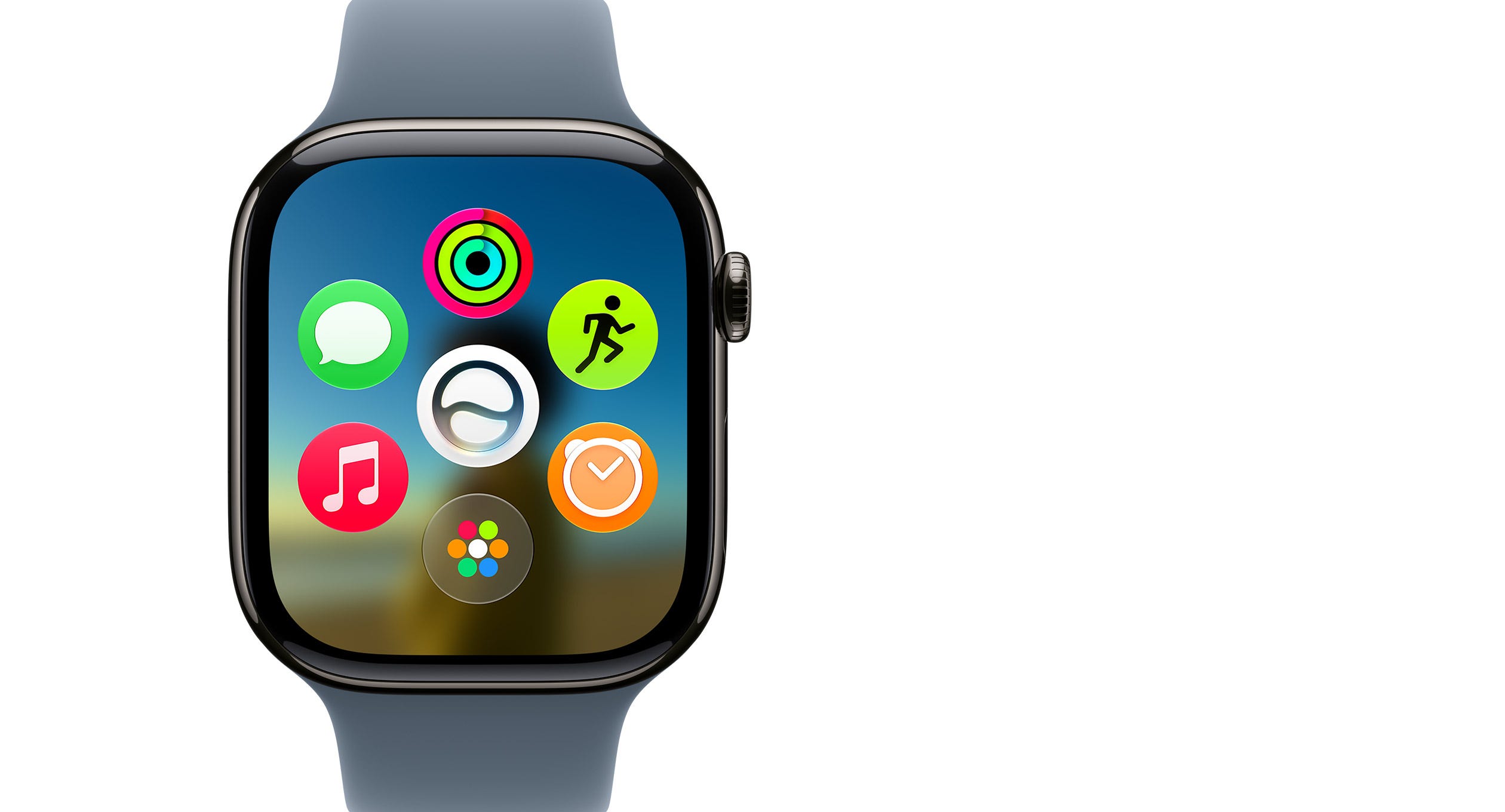
With the impending releases of Apple OS 27, some media outlets are preparing their readers for the changes that Apple users will have to adjust to once they install new software. Writing for 9to5Mac, Zac Hall identified a few key changes in watchOS 27 that might make Apple Watch users confused.
First, the multitasking shortcut is missing in watchOS 27:
[…] there’s the Digital Crown double-click multitasking gesture that now does … the same thing as single-clicking the Digital Crown. […]
I don’t know if double-clicking the Digital Crown will be the way forward on multitasking in watchOS. Still, a way to quickly jump between two apps or an app and the watch face has always been useful. I hope a solution returns.
The second is the change to the app icons grid:
Since watchOS 1 (when it was called Watch OS 1), clicking the Digital Crown from the watch face or inside an app has invoked the full app launcher. Before now, the biggest change to this system was when Apple removed the first click centering the app grid before returning to the watch face.
watchOS 27 replaces it with the dynamic app grid: five intelligently suggested apps, the Siri app, and an icon for the full app grid. You can tap the app grid icon, or scroll the Digital Crown up to see your full grid or list of apps.
The lack of multitasking shortcut is very confusing: personally, I use it all the time on my Apple Watch and it’s my default way of switching between the most-used apps. It’s unclear whether this change is a beta bug or a deliberate decision on Apple’s part.
Zooming out, these changes in watchOS 27, combined with a dramatically more capable Siri AI, signal what I believe is an important paradigm shift for the Apple Watch: it is no longer considered by Apple as an app-first device. Instead of using your apps actively, the Apple Watch is shifting to a product that you use primarily to interact with Siri AI, and you operate it with Siri AI.
On the one hand, it makes sense. The Apple Watch has never been a thriving app platform; I don’t remember the last time I installed a watchOS app from the App Store. Most of the usage time goes to Apple’s first-party apps, and more and more interactions with the Watch over the years have been made via Complications, Siri, and more recently, app widgets.
Yet, apps are a major part of the Apple Watch experience, and making the process of opening apps and switching between apps less straightforward or requiring more taps might frustrate users.
The arrival of Siri AI allows the Apple Watch to evolve into an AI companion device that I long hoped it would become. There is something very powerful to the idea of having advanced computer intelligence on your wrist through a tiny wearable device that can understand your personal context and has the world’s knowledge. Alongside the iPhone, the Apple Watch powered by Siri AI is Apple’s defense against rumored wearable consumer products from OpenAI or similar. While I welcome Apple’s moves in this direction, the company should be cautious with not changing paradigms too quickly, as millions of Apple Watch users are relying on apps.
Apple game controller rumors
Recent Apple’s software release included references to two products potentially in development, which appear to be Apple’s own game controllers.
The references appeared within code briefly included in macOS 26.7, first spotted by pdfu, a MacRumors forum regular. The controllers in question are identified as “T6502” and “T1057”.
The game controllers will likely be similar to others that already exist on the market. There are notable differences between T6502 and T1057, though.
Both will feature a four-button ABXY layout, two clickable thumbtacks, shoulder buttons, analog triggers, and Home and Menu buttons. Essentially, they’ll have the same functionality as any of the first- or third-party PlayStation- or Xbox-like controllers out there.
If Apple were to design and produce their own game controllers, that would signal the company’s growing interest and increasing area of focus on core gaming. Yet, as the AppleInsider article rightfully points out, it’s puzzling why Apple would design controllers that operate very similarly to products from Sony, Microsoft, and many other manufacturers. My guess is that Apple might have considered bundling the next-generation Apple TV product with a controller. It would be hard to imagine Apple bundling a third-party controller with their product, so they need a first-party solution.
In an earlier A Different Road article, I talked about the lack of an Apple first-party controller being one of the issues that prevents the company from becoming a major player on the market:
Touch controls as the only “default” input method on iPhones and iPads – and the Siri Remote playing that role for the Apple TV box – is the lowest common denominator that works against Apple’s gaming ambitions in two major ways: the customers don’t want to – or don’t know how to – engage with more mechanically complex and sophisticated games, and the developers have no incentives to develop games with deeper mechanics for Apple’s platforms. Yes, Apple devices have long been supporting controllers, but how many iPhone and iPad users have them, let alone would be willing to carry them everywhere they go? Why even bother, when Switch 2 or Steam Deck is such a dramatically better experience for handheld gaming?
What’s the solution here for Apple? Obviously, Apple will and should never start designing iPhones and iPads with buttons and sticks for game controls on them. And yet, educating customers and making such game-specific controls available to as many Apple customers as possible is important.
In the article, I argued that Apple’s game controller should take inspiration from the magnetically attaching JoyCons that are a key element of the Nintendo Switch 2. If Apple’s controller is a more traditional gamepad, that would feel a bit disappointing as it wouldn’t seem to be designed for iPhone and iPad gaming.
Regardless of how Apple’s hypothetical game controller would look and would work, making one is only one step in the right direction. Others – such as a gaming-capable Apple TV hardware product and major changes to the games library management across the Apple ecosystem – are even more important if Apple were to take gaming seriously.
XBOX Cloud Gaming is basically dead

The never-ending saga of Microsoft regularly blasting itself in the foot from the highest possible caliber weapons when it comes to gaming continued this week with changes coming to XBOX Cloud Gaming.
Jez Corden writes for Windows Central:
Xbox Cloud Gaming has essentially been put out to pasture, with Microsoft intent on including hourly limits on the service.
From November 2026, Microsoft will impose a 15-hour cap on Xbox Game Pass Ultimate users playing cloud games, as well as a 10-hour cap on Premium, and 5 hours on Essential. It’s a huge climbdown from the previous “unlimited” access Xbox Cloud Gaming granted, and an indictment of the business model in general.
…
The issue for me is ... 15 hours just isn’t enough to complete the vast majority of decent games these days. Fable is supposedly around 30 hours long for a completionist playthrough. Will Xbox Cloud Gaming users be expected to spread their session across two months to finish the game?
…
I was recently told by Microsoft figures that, given compute demands for AI, Xbox Cloud Gaming is effectively losing money when used beyond 15 hours per month. When you have Azure server rack space being used for anything other than AI, it seems Microsoft isn’t particularly sentimental towards the idea anymore.
15 hours of playtime per month (let alone 10 or 5 hours for cheaper subscription tiers) is so laughable that it’s absurd. Don’t get me started on all kinds of inconveniences and anxiety such time limits would put on customers who even don’t spend too much time on the service – let alone hardcore gamers who spend as many hours playing games in a week. Corden’s take that XBOX Cloud Gaming is essentially killed off with this change is accurate – it’s impossible to take the service seriously anymore.
Microsoft’s approach to managing its game business resembles a headless chicken running in circles. There appears to be no strategy at all. Even before the current components crisis hit the industry the sales of the XBOX consoles were a disaster, so it would make sense for the company to exit the games hardware business – yet, the new XBOX CEO Asha Sharma claims that the console is important to the company’s strategy and the next-generation PC/console hybrid Project Helix is still in the works. Regardless, XBOX will almost certainly never be a major gaming hardware platform again, so it would seem logical to focus instead on nurturing the big roster of game IP Microsoft owns, Game Pass growth, and cloud gaming. Instead, Microsoft routinely shuts down or guts studios, cancels games, lays off thousands of employees, and now essentially kills off the Cloud Gaming service. You would think Cloud Gaming would seem like a major strategic priority for Microsoft’s post-hardware cross-platform future where the gaming business is monetized via Game Pass subscriptions and would critically rely on games being playable on any device, including via the cloud – and yet, here we are.
This makes no sense at all, and I wonder when it completely stops making any sense to Microsoft’s shareholders.